
Business
7 Critical Third-Party Risk Management Challenges

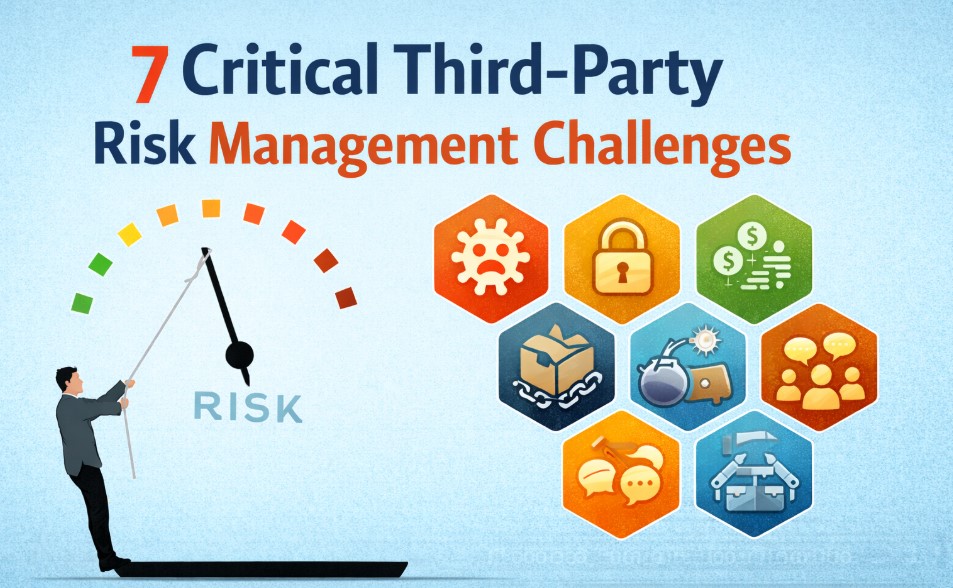
Organizations find themselves at the nucleus of a web of digital ecosystems. Third-party relations have become the norm and are essential to running a successful business. The problem arising from these relations poses significant risks. The issue spans from cybersecurity threats to matters related to regulatory compliance. Acknowledging these challenges marks the beginning of overseeing these companies effectively.
This article looks into the difficulties of managing third-party risks. The aspects that have been considered include operational and cybersecurity risks. Understanding them is crucial in building robust relationships.
N-Tier Risks: Vast and Complex Vendor Ecosystems
Currently, organizations face a rising number of third-party service providers. Managing these relationships is becoming increasingly complex.
Scalability and Visibility Issues
The average enterprise maintains relationships with hundreds or even thousands of third-party vendors. This is a substantial volume that creates big management challenges. Maintaining precise inventories of all external relationships is extremely challenging for teams.
Many companies lack strong visibility into their vendors. Others lack understanding of who has been accessing vital systems or performing critical functions. Recently, 61% of organizations have been found to have been victims of data breaches by third parties.
Fourth-Party and Downstream Dependencies
The vendors also have their personal subcontractors and service providers. This brings about fourth-party and, in some cases, fifth-party risk. These are normally non-transparent risks for the main organization.
A breach that happens at a lower level can cause ripple effects and affect your organization. Organizations are often unaware of these until a breach occurs in their system. It takes a lot of effort to map these complex relationships using special software.
Digital Ecosystem Complexity
The cloud services and APIs have exacerbated the complexity. Suppliers are now fully integrated into the core systems, no longer at arm’s length. The risks associated with the attacks at the level exposed by the cloud services and APIs cannot be ignored. Organizations need to be aware of the suppliers they use. They also need to be assured of the level at which the relationships have gone.
Risks Related to Cybersecurity and Data Privacy
Access to and processing of sensitive data by third-party vendors is common. Such circumstances have turned vendors into easy targets for cyber-criminals.
Exposed Data and Breached Security Issues
The vendors work with the personal information of customers and the proprietary data of businesses. In the event of a breach by a third party, all its collaborating companies are affected. Hackers now prefer to target vendors to eventually attack bigger firms. The sophistication of supply chain attacks is increasing. Organizations must assume that the security boundary now extends to all data-having vendors.
Security Control Consistency
It is challenging to sustain the same levels of security applied across diverse partnerships. Vendors use different levels of security controls. Small vendors might not have the resources to provide enterprise-level security.
Meanwhile, the large vendors may have inconsistent levels of security implementation. There should be security guidelines that organizations can check for compliance.
Compliance with Privacy Regulation
Data protection laws like GDPR and CCPA have set rigid guidelines for the processing of personal data. Such regulations hold the corporation responsible for the conduct of its vendors in the processing of data.
If there is non-compliance, it can result in hefty fines and damage to the organization’s image. Companies have to make sure that their suppliers also abide by the data privacy rules. It is very important to have a good grasp of data flow in this matter.
Regulatory Compliance and Evolving Global Laws
The business environment itself has become increasingly complex. Obligations differ by region, the business sector, and the type of data.
Multiple Jurisdictional Requirements
Global operations imply adherence to various laws of different countries and regions. Every region has varying requirements for data protection and governance control over vendors. For financial services institutions, there are rules such as SOX. For healthcare institutions, healthcare rules such as HIPAA apply. Tech institutions also operate based on sector-based regulations. There is a lot of complexity involved in managing these overlapping regulations.
Keeping Pace with Regulatory Change
The rate at which new laws and regulations appear is alarming. Third-party risk management (TPRM) rules are being made more stringent with each passing day. This means organizations have to be alert to the emerging trends.
This changing landscape is what makes continued compliance tough. What satisfied regulators last year may not do so today. Companies must design mechanisms to discover changes in regulations and their immediate adaptation.
Third-Party Verification of Compliance
Confirmation of vendor compliance is an ongoing activity. It cannot be left to an organization that accepts a lot of the vendors. An audit, to some extent, independently verifies the above facts as true. For small vendors, detailed formal documentation may not exist. It is critical for the enterprises to balance verification and the realistic limitations.
Absence of Continuous Monitoring and Visibility
The conventional risk assessment merely shows the current risk coming from a vendor. However, this does not represent the dynamic environment around contemporary threats.
Limitations of Point-in-Time Assessments
Annual vendor reviews soon become outdated; a vendor’s posture can worsen between reviews. New weaknesses are being discovered for the security systems all the time. Companies that depend on yearly reviews are choosing to act on past information. Gaps between assessments are blind spots for the organizations.
Real-Time Threat Detection Gaps
Cyber threats change very fast. They must be continually monitored to be detectable. In the absence of real-time visibility, an organization gets to know about vendor breaches only when the harm is done. This offsets the cost associated with a breach.
Notification systems that provide instantaneous updates to an organization will fill this gap. Third party risk management software with continuous monitoring capabilities helps address these detection gaps.
Multi-Tier Supply Chain Visibility
To understand risks associated with your vendor’s suppliers means going beyond the abilities offered by conventional techniques. It is common for organizations to lack the tools necessary to cover risks extending past their immediate suppliers. This hurts companies due to a lack of visibility for potential cascading failures in supply chains.
Inadequate Due Diligence and Onboarding
The process of vendor onboarding establishes the groundwork. Lack of sufficient vetting introduces vulnerabilities into the system.
Initial Risk Assessment Weaknesses
Many organizations conduct superficial pre-engagement assessments. These fail to identify critical vulnerabilities before contracts are signed. Procurement may prioritize speed over thoroughness. Security teams often enter the process too late. This allows high-risk vendors into the ecosystem.
Vendor Tiering and Classification
Not all vendors present equal risk. Organizations need structured approaches to classify vendors based on data access and criticality. Many lack formal tiering methodologies. Without classification, resources get misallocated. Effective tiering enables appropriate controls based on actual risk.
Pre-Onboarding Vulnerability Detection
Identifying weaknesses before onboarding prevents problems. This requires a thorough technical review. Organizations should verify security certifications and review incident history. Many skip these checks or conduct them only for the largest vendors. This selective approach leaves organizations exposed.
Limited Resources and Poor Collaboration
Effective management requires significant resources and coordination. Many organizations struggle to provide these.
Budget and Skill Limitations
Third-party risk management programs often operate with limited resources. This makes it difficult to build a strong team and access the best solutions. There is also a shortage of deep TPRM expertise. This means that most third-party suppliers respond reactively rather than proactively.
Tooling and Technology Gaps
Many firms use spreadsheets in manual processes to manage risk. These tools lack the scalability to expand with the ever-growing portfolio. The tools offer little analytics value. Companies need specially designed platforms to manage these risks. However, not all firms have the ability to afford these platforms.
Internal Coordination Challenges
Effective management requires collaboration across departments. IT understands technical risks. Legal manages contracts. Procurement handles relationships. Security assesses controls. These groups often work in silos. Inconsistent processes create coverage gaps. Absence of strong governance leads to fragmented actions.
Operational Resilience and Vendor Concentration
It is the responsibility of businesses to their third-party partners to keep their operations running smoothly. This remains critical, especially in the event of a disaster.
Business Continuity Risk Management
These vendors have various risks related to bankruptcy and financial problems. They also have a risk related to natural disasters and cyber-attacks. This kind of disruption directly impacts the companies that depend upon such suppliers.
Sadly, the majority of companies are unaware of their vendors’ continuity plans. You need to verify the backup systems and robust recovery capabilities of your vendors.
Concentration Risk Management
Over-reliance on a few vendors creates single points of failure. When multiple functions depend on one vendor, its problems become organizational crises. Concentration risk includes geographic and technology dependencies. Organizations need strategies to identify and mitigate these concentrations.
Impact Amplification
Failures in vendor management have consequences beyond what happens when there is downtime. For instance, lost sales occur because of system downtime. On matters related to security, there is reputational damage.
Beyond this, failure to observe regulations attracts penalties. This is because of the interrelated nature of businesses. Understanding this enables better resource allocation.
Conclusion
Third-party risk management has emerged as a need for strategic competency. Nonetheless, it faces challenges that must be addressed continually. Overcoming them instills resilience and develops business competitiveness. To succeed, there is a need for organizations to adopt continuous monitoring and mitigation of these risks. Successfully managing these challenges strengthens third-party partnerships.



How AI Helps Detect Integration Failures Earlier

Choosing Estal: When Standard Glass Actually Helps Your Brand

Large Format Kitchen Tiles: Redefining Space and Visual Continuity

The Full Breakdown: What International Travel Insurance Covers in Medical Emergencies?

What Exactly Happens After a Peace Bond Expiration?
-

 Tech2 months ago
6 Free Spotify Downloader Tools for Songs and Playlists
-

 Finance2 months ago
How to Invest Mutual Funds for Beginners Step by Step
-

 Education2 months ago
Understanding Hamlet: Who Wrote It, Where It’s Set, and Who’s Who
-

 Tech2 months ago
What is Lopalapc2547? New vs Old Versions, PC Support, and Cost