
Animals
Understanding the American XL Bully Ban in the UK: Rules and Changes in 2026


The legal position of American XL Bully dogs in the UK has changed significantly since the ban was first announced in 2023. At that time, owners, rescue organisations and animal welfare groups were preparing for new restrictions and there was uncertainty about exactly how the rules would work.
By 2026, the situation is much clearer. The restrictions are no longer an upcoming proposal. XL Bully dogs are subject to legal controls across England, Wales, Scotland and Northern Ireland, although the dates on which the rules took effect differed between the four nations.
In England and Wales, it has been a criminal offence since 1 February 2024 to own or possess an XL Bully without a valid Certificate of Exemption. Selling, giving away, abandoning or breeding from an XL Bully is also prohibited, and exempt dogs must be kept on a lead and muzzled in public.
Further changes took effect in 2026, including the removal of the legal requirement for third-party public liability insurance and a new child-supervision requirement taking effect in November.
What is the Current XL Bully Law in the UK?
The rules are broadly similar across the UK, but they were introduced separately.
| UK nation | Key ownership restriction took effect | Current basic position |
| England | 1 February 2024 | Certificate of Exemption required |
| Wales | 1 February 2024 | Certificate of Exemption required |
| Scotland | 1 August 2024 | Certificate of Exemption required |
| Northern Ireland | 31 December 2024 | Certificate of Exemption required |
England and Wales introduced the ownership restriction first. Scotland subsequently made possession without an exemption an offence from 1 August 2024. Northern Ireland introduced its first restrictions in July 2024, followed by the exemption requirement from 31 December 2024.
The important point for owners in 2026 is that the original application periods have closed. In England and Wales, new exemptions can now only be authorised through a court order. Scotland similarly states that new exemptions can only be granted where an application has been authorised by a court.
Can You Still Own an XL Bully?
Yes, but simply owning one as an ordinary unrestricted pet is no longer permitted.
An owner who already has a valid Certificate of Exemption can continue to keep the dog as long as the applicable conditions are followed.
For an exempt XL Bully in England and Wales, the owner must, among other requirements:
- Keep the dog muzzled in public.
- Keep it on a lead in public, securely held by someone aged at least 16.
- Keep the animal in secure conditions so that it cannot escape.
- Maintain the required microchip information.
- Notify Defra of certain changes, including a permanent change of address.
- Meet the applicable neutering requirements.
- Produce the exemption certificate and allow the microchip to be checked when lawfully requested.
Failure to follow exemption conditions can invalidate the exemption, potentially leading to seizure and prosecution.
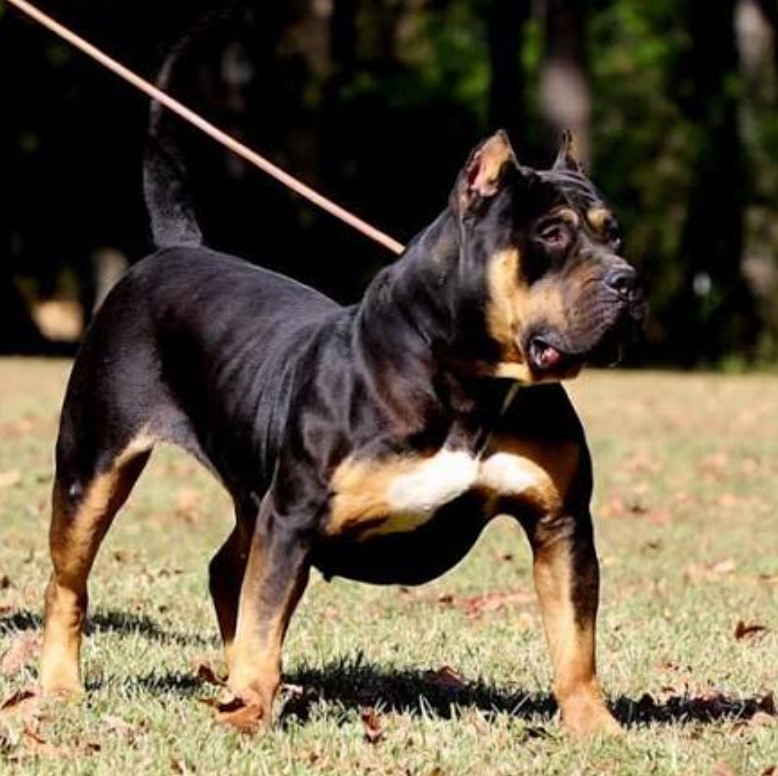
Image Source: DAVINCI EXOTIC BULLIES
The rules also make it an offence to sell, give away, abandon or breed from an XL Bully. This means that exemption is not the same as returning the breed to normal legal status.
A Major Change in 2026: Insurance is No Longer Required
One important part of older articles about the ban is now out of date.
Originally, owners of exempt XL Bullies were required to maintain third-party public liability insurance. That requirement changed on 1 July 2026.
The UK Government now states that third-party public liability insurance is no longer legally required for banned breed dogs, including XL Bullies, in England and Wales. Scotland has also removed the requirement.
Therefore, older guidance telling owners that insurance is an ongoing legal condition should be updated.
Other exemption requirements, including muzzling, leads, secure accommodation, microchipping and neutering, continue to apply.
New Child-Supervision Rule From November 2026
Another significant development is scheduled for 1 November 2026.
In England and Wales, an owner must not leave a child under 12 in close contact with an XL Bully or another banned breed dog in a private place, such as a house or garden, without adult supervision. The measure becomes a condition attached to Certificates of Exemption.
Scotland is introducing a corresponding rule. Scottish guidance states that an adult aged 16 or older must be present when a child under 12 is with a prohibited dog in a home or other private place.
Northern Ireland guidance also states that from 1 November 2026, children under 12 must not be left in close contact with a banned dog in a private place without adult supervision.
This means owners should update their household arrangements before the November deadline.
How is an XL Bully Identified?
Identification has been one of the most controversial parts of the policy.
The legal rules focus on a dog’s physical characteristics rather than simply its pedigree, registration or the breed name given by an owner.
GOV.UK explains that whether a dog is a banned type depends on its appearance rather than its breed name. Police or council dog experts can assess a suspected prohibited dog.
This distinction matters because the American Bully XL is not treated simply as a conventional pedigree category for enforcement purposes.
A dog could therefore potentially fall within the legal definition because it meets the relevant physical standard even if an owner describes it as a crossbreed or uses another breed description.
Northern Ireland adopted the same physical conformation standard used in England and Wales, which was developed by Defra in consultation with police, local authorities, vets and animal-welfare experts.
Owners who are uncertain about their dog’s status should therefore rely on current official guidance rather than assumptions based only on paperwork or the name under which the dog was purchased.
Can an XL Bully Be Sold or Rehomed?
Generally, no.
In England and Wales, it is illegal to sell, give away or transfer an XL Bully. Government guidance also specifically tells rehoming organisations that they should not rehome XL Bully dogs.
Scotland similarly prohibits selling, giving away and rehoming these dogs.
This has significant consequences for rescue organisations. A rescue centre cannot simply treat an affected dog like another animal waiting for adoption.
That was one of the concerns raised by animal welfare organisations when the legislation was introduced.
Why Has the Ban Remained Controversial?
The policy was introduced as a public-safety measure, but debate about breed-specific legislation has continued.
The RSPCA opposes the XL Bully ban and argues that breed-specific legislation is not an effective way of protecting the public. It also objects to identifying prohibited dogs largely through their physical appearance and advocates approaches focused on prevention and responsible ownership regardless of breed.
Dogs Trust also states that it does not agree with the XL Bully ban or breed-specific legislation, while providing practical assistance such as muzzle-training and behaviour advice to affected owners.
The government says the controls are part of measures intended to protect the public. In announcing the additional child-safety measure in June 2026, Defra said the change was intended to reduce the risk of serious injuries involving children in domestic environments.
These positions illustrate the continuing disagreement: government policy uses breed/type-specific controls as one part of public-safety law, while major animal welfare organisations argue that dog-control policy should place greater emphasis on behaviour, prevention and responsible ownership.
What Happens If Someone Owns an XL Bully Without an Exemption?
The consequences can be serious.
In England and Wales, an XL Bully cannot legally be owned or possessed without a valid exemption. Government guidance advises anyone who believes they have one without an exemption to contact their local police force.
Police or council officers have powers relating to suspected banned dogs. A dog may be seized even when it has not behaved dangerously or generated a complaint. Depending on the circumstances, the case may then go before a court.
Government guidance states that unlawful possession of a banned dog can lead to an unlimited fine, up to six months in prison, or both, and the dog may be destroyed. A court can, in some circumstances, issue a Contingent Destruction Order that allows an application for exemption if it considers the dog not to be a danger to public safety.
Does the Dangerous Dogs Act Apply Only to XL Bullies?
No. XL Bullies joined an existing list of prohibited dog types.
The banned types listed in current government guidance are:
| Banned dog type |
| Pit Bull Terrier |
| Japanese Tosa |
| Dogo Argentino |
| Fila Brasileiro |
| XL Bully |
Importantly, separate dangerous-dog laws can apply to dogs of any breed. It is against the law to allow a dog to be dangerously out of control in public or private places, including inside an owner’s home.
Therefore, the wider legal responsibility for controlling dogs is not limited to breeds covered by the specific ban.
What XL Bully Owners Need to Know in 2026
For someone who legally owns an exempt XL Bully, the most important point is that the ban did not end after the initial registration process. The conditions continue throughout the dog’s life.
Owners should keep their exemption information current, maintain microchip records, comply with neutering requirements, keep the dog secure and use a lead and muzzle whenever legally required.
The 2026 changes should also be noted carefully. Third-party liability insurance stopped being a legal requirement from 1 July 2026, while the new rules concerning unsupervised children under 12 take effect on 1 November 2026.
Because requirements can differ between England and Wales, Scotland and Northern Ireland, owners should check the guidance applicable to the nation where they live rather than relying on older articles or social-media posts.
Conclusion
The UK XL Bully situation has moved well beyond the uncertainty that surrounded the original 2023 announcement. The restrictions are now established law throughout the UK, with certificates required for legal ownership and strict controls remaining on breeding, selling, transferring and handling these dogs in public.
At the same time, the rules continue to evolve. The removal of mandatory third-party insurance in July 2026 and the introduction of child-supervision requirements in November demonstrate why information published during the original announcement period can quickly become outdated.
The policy also remains contested. The government presents the restrictions as public-safety safeguards, while organisations including the RSPCA and Dogs Trust continue to oppose breed-specific legislation and advocate different approaches to reducing dog-related harm.
For owners, the practical priority is straightforward: understand which national rules apply, ma



How to Choose an Ergonomic Office Chair for Women That Actually Fits

Top Movies and TV Shows in the US: JustWatch September 2026 Streaming Charts

5 Best Indoor Air Quality & Mold Companies in Houston (2026)

The Spreadsheet Habit That Quietly Breaks Business Dashboards as Teams Scale

The White Lotus Season 4 in France: Filming Locations, Cast, Plot and 2027 Release Date
-

 Celebrity1 month ago
Eileen Gu: Age, Parents, 2026 Olympics, Modeling Career, Height and Personal Life
-

 Tech1 month ago
18Moa – Website Directories, Online Discovery, and Safer Browsing
-

 Entertainment2 months ago
Flujo TV: What it is, How It Works, Features, Devices, and Safety
-

 Tech2 months ago
WhatsApp Username Not Showing? Safe Fixes to Try