
Travel
Manikarnika Ghat in Varanasi: History, Cremation Rituals, Beliefs and Visitor Guide

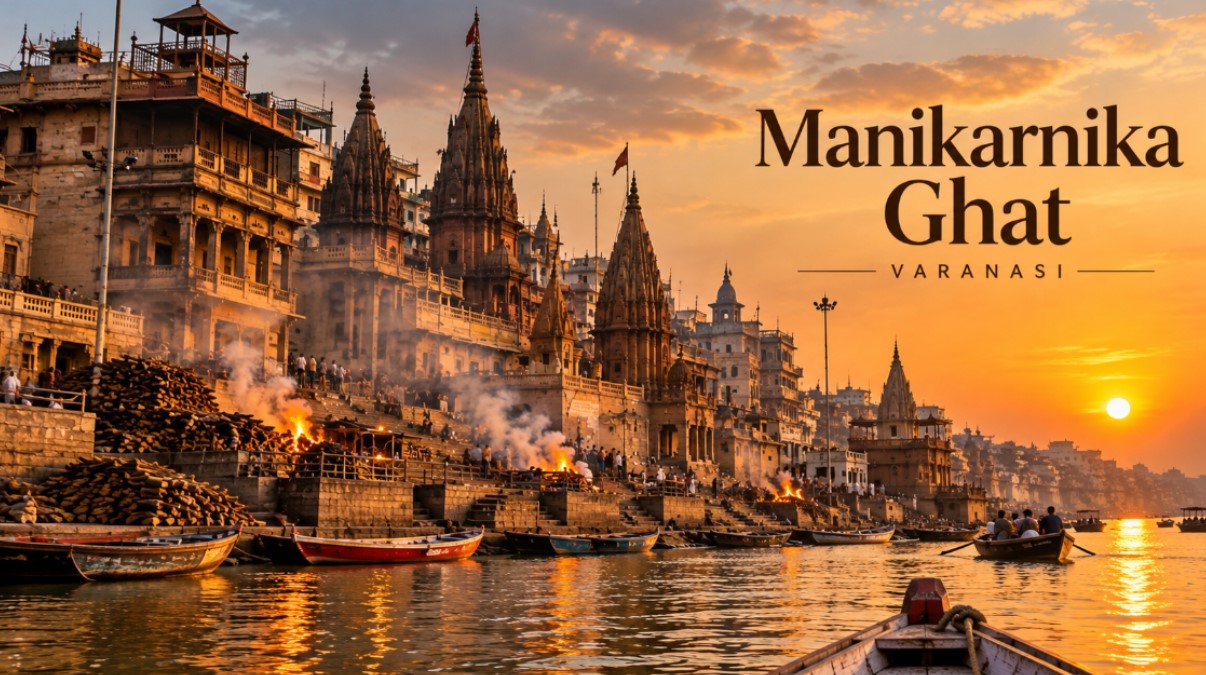
Manikarnika Ghat is one of the best known and most sacred riverfront sites in Varanasi, Uttar Pradesh. Located beside the River Ganga, it has a central place in Hindu traditions connected with death, cremation and moksha, or liberation from the cycle of birth and rebirth.
Varanasi is also widely known as Kashi and Banaras, whichiexplains why people may refer to the location as Manikarnika Ghat Banaras or connect it generally with the Kashi ghats. The city has 88 ghats according to the Varanasi district administration. Most are primarily associated with bathing and religious ceremonies, while two are used specifically as cremation sites.
Manikarnika is one of those cremation grounds. However, describing it simply as a crematorium in Varanasi does not fully explain its importance. It is a religious site connected with centuries of traditions, Hindu beliefs, pilgrimage and the wider sacred geography of Kashi.
Visitors should also understand that this is an active funeral site rather than an ordinary tourist attraction. Families come here to perform final rites for relatives. Anyone visiting should therefore behave respectfully and avoid treating cremations as entertainment or photo opportunities.
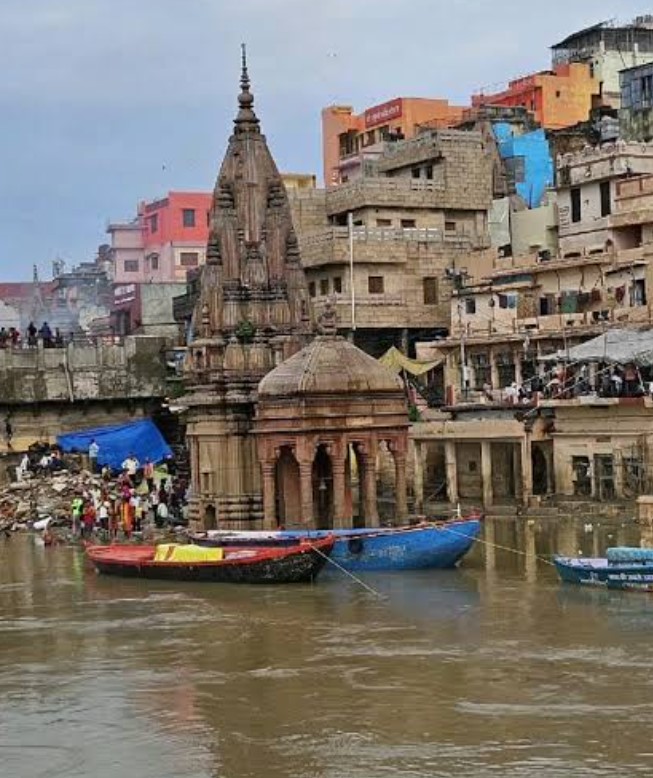
Manikarnika Ghat on the banks of the Ganga in Varanasi
What is Manikarnika Ghat?
Manikarnika Ghat is a historic ghat on the western bank of the Ganga in Varanasi. In Indian river cities, a ghat generally refers to a series of steps or structures leading down toward a river.
The site has several religious functions, but it is particularly known as one of the city’s principal Hindu cremation grounds.
India’s official tourism portal describes it as one of the holiest cremation grounds in Hindu tradition. It is situated between Dashashwamedh Ghat and Scindia Ghat.
The southern section is associated with cremations, while official tourism information also describes a northern section used for bathing and religious rituals.
This distinction is useful because the area has religious significance beyond funerals.
| Quick fact | Information |
| Location | Varanasi, Uttar Pradesh, India |
| River | Ganga |
| Also associated with | Kashi and Banaras |
| Primary significance | Hindu pilgrimage and cremation rites |
| Nearby ghats | Dashashwamedh Ghat and Scindia Ghat |
| Important sacred feature | Manikarnika Kund |
| Religion most closely associated with the site | Hinduism |
| City airport | Lal Bahadur Shastri International Airport |
| Major railway station | Varanasi Junction |
Why is Manikarnika Ghat So Important?
To understand the importance of the site, it is necessary to understand the religious significance of Varanasi itself.
Kashi has been an important Hindu pilgrimage destination for centuries and is particularly associated with Lord Shiva. The Varanasi district administration explains that Hindus traditionally believe that dying in Varanasi can bring salvation and freedom from the cycle of birth and rebirth.
Moksha is a major concept in several Indian religious traditions. In a Hindu context, it generally refers to liberation from samsara, the continuing cycle of birth, death and rebirth.
Because Kashi is considered sacred, final rites performed there have deep meaning for many Hindu families.
Manikarnika’s importance comes from this combination of place, ritual and religious belief.
It is therefore not simply a location where bodies are cremated. For those following these traditions, performing the final rites in Kashi has spiritual significance connected with the deceased person’s journey after death.
The Meaning Behind the Name Manikarnika
The name itself is associated with Hindu religious traditions.
One well-known account connects the location with Goddess Parvati’s earring.
According to the legend described by India’s official tourism portal, Lord Vishnu created a sacred pool near the ghat for Lord Shiva and Goddess Parvati. During their time there, an earring belonging to Parvati fell into the pool. Lord Shiva then searched for it.
The name is commonly explained through Sanskrit terms associated with a jewel and an ear.
As with many ancient religious locations, different versions of the story exist. These accounts should be understood as religious traditions rather than documented historical events.
The site remains closely connected with these beliefs today.
Manikarnika Kund
One of the important sacred features near the ghat is Manikarnika Kund, also known as Chakra Pushkarini Kund.
The official Shri Kashi Vishwanath Temple website describes the kund as being located at the ghat beside the Ganga. According to religious tradition, Lord Vishnu created it with his discus.
The same source describes it as Adi Manikarnika Tirtha and states that early inscriptions indicate stone construction at the ghat around the beginning of the 14th century. It also records support for reconstruction from Bajirao Peshwa in the 18th century.
This helps separate two different aspects of the site: its traditional religious origins and the documented construction and rebuilding of the physical ghat.
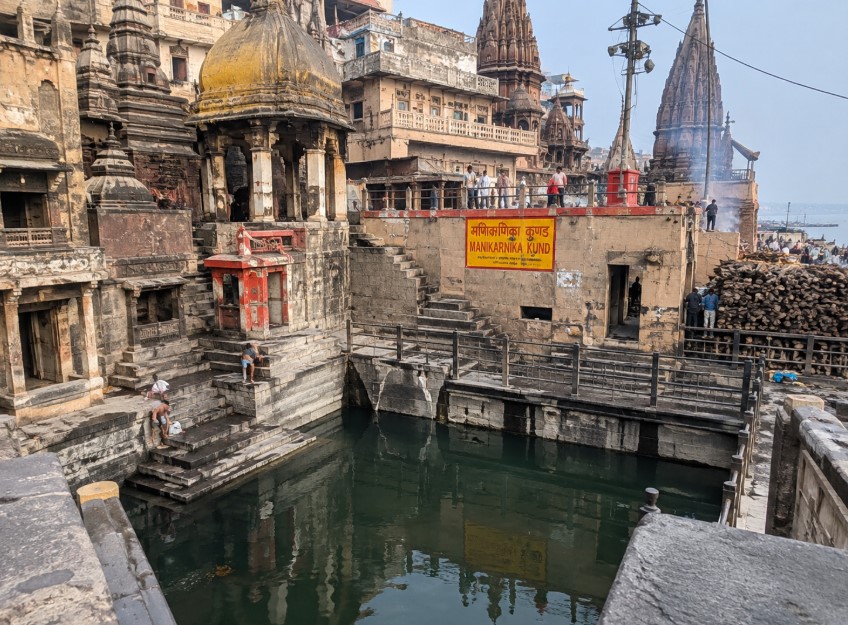
Manikarnika Kund near the historic cremation ghat in Varanasi
History of Manikarnika Ghat
Giving one exact construction date for the entire site would be misleading.
Varanasi’s riverfront has developed over centuries, and many of the structures visitors see today were constructed or rebuilt much later than the traditions associated with them.
The Varanasi district administration states that many of the city’s current ghats were rebuilt after 1700, when the region was under Maratha influence. Marathas, Scindias, Holkars, Bhonsles and Peshwas were among the patrons associated with the development of the ghats.
For this particular site, the Shri Kashi Vishwanath Temple Trust says early inscriptions suggest stone construction dating to the beginning of the 14th century, with Bajirao Peshwa supporting reconstruction in the 18th century.
India’s tourism portal also notes references to the ghat in literature dating to around the fifth century.
It is therefore useful to distinguish the long religious tradition associated with the location from the dates of surviving or reconstructed physical structures.
Cremation at Manikarnika Ghat
The cremations performed here are Hindu funeral rites.
Traditionally, cremation is used in Hinduism as part of the final rites known as antyeshti. Exact customs can vary according to family, region, community and religious tradition.
The deceased is generally brought to the cremation ground, where family members and those responsible for the rites complete the necessary preparations. A pyre is traditionally constructed using wood before the cremation takes place.
Relatives may perform prayers and other ceremonies according to their customs.
Because these are genuine funerals involving grieving families, visitors should avoid interrupting the ceremonies.
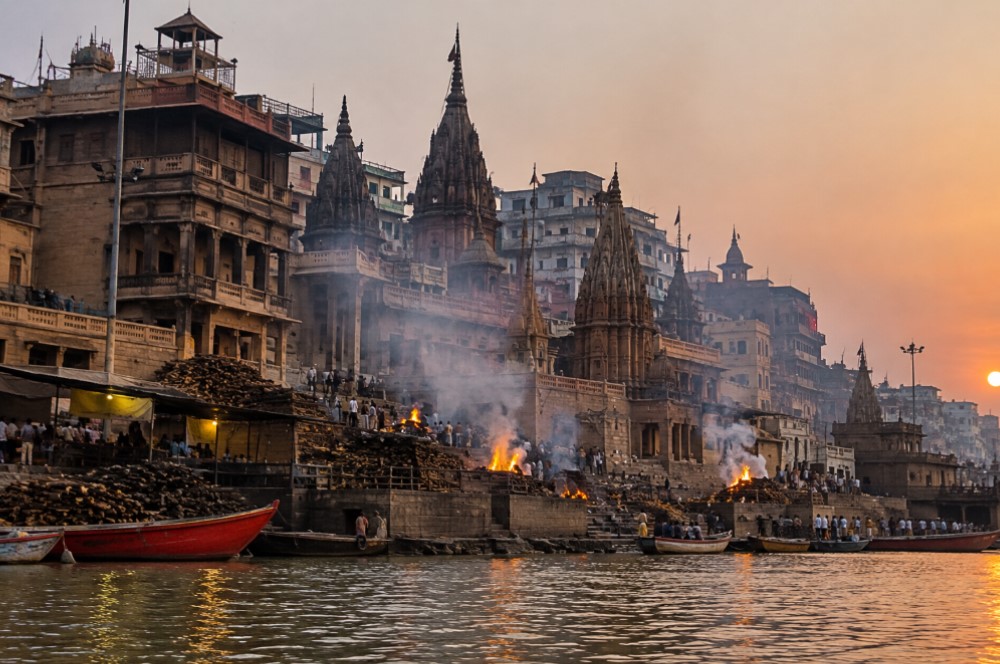
Historic riverside structures at Manikarnika cremation ghat in Varanasi
Is Manikarnika Ghat a Crematorium?
People searching online for a crematorium in Varanasi may encounter information about this location.
The word “crematorium,” however, can create the wrong impression if someone expects a modern enclosed facility.
Manikarnika is a traditional open-air cremation ground beside the Ganga. Cremation rites are carried out as part of Hindu funeral traditions.
Varanasi also has Harish Chandra Ghat, another major cremation site. Official Indian tourism information identifies Harish Chandra as one of the city’s two cremation ghats and notes that an electric crematorium was established there during modernisation in the 1980s.
The two should not be confused.
Manikarnika Ghat vs Harish Chandra Ghat
Both sites are associated with cremation, but they are separate locations.
| Manikarnika Ghat | Harish Chandra Ghat |
| Major sacred cremation ground | Another historic cremation ghat |
| Associated with Manikarnika Kund | Associated with King Harish Chandra in Hindu tradition |
| Located near Scindia Ghat | Located farther south along the riverfront |
| Strongly associated with Shiva and Vishnu traditions | Named for the legendary King Harish Chandra |
| Traditional open-air cremations are prominent | Also has modern electric cremation facilities |
Official tourism information describes Harish Chandra Ghat as smaller and states that it is also known as Adi Manikarnika.
This may contribute to confusion when researching cremation sites in Banaras.
Is Manikanta Ghat the Same Place?
People occasionally search for “Manikanta Ghat” when looking for information about the famous cremation site in Varanasi.
In this context, the established name is Manikarnika Ghat.
Official tourism and government sources use “Manikarnika Ghat.” Therefore, if someone is using “Manikanta Ghat” to refer to the famous cremation ground in Kashi, they are most likely looking for Manikarnika.
However, similar names can exist elsewhere in India, so the terms should not automatically be treated as interchangeable in every geographical context.
What are the Kashi Ghats?
Manikarnika is only one part of Varanasi’s extensive riverfront.
Government information states that the city has 88 ghats. Most are used for bathing, worship and religious ceremonies, while a smaller number have specialised functions.
Some of the better-known ghats include:
- Dashashwamedh Ghat
- Assi Ghat
- Manikarnika Ghat
- Harish Chandra Ghat
- Scindia Ghat
- Panchganga Ghat
- Lalita Ghat
Each has its own history and religious associations.
Dashashwamedh is particularly well known for Ganga Aarti, while Assi Ghat is associated with morning religious and cultural activities. The cremation ghats have a distinctly different purpose and atmosphere.
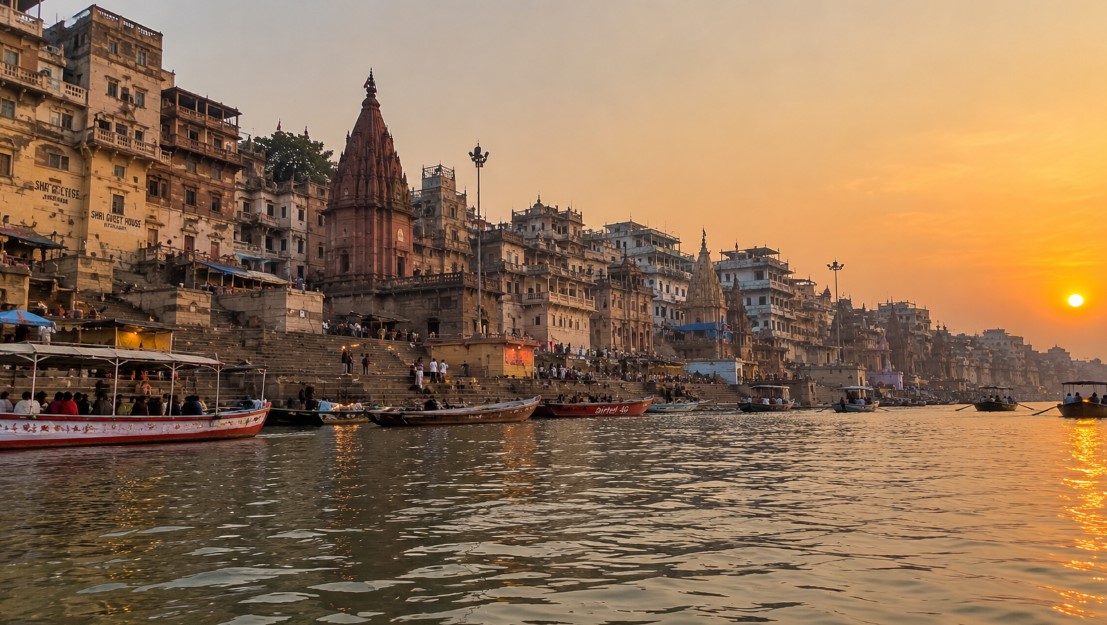
Kashi ghats along the River Ganga in Varanasi
Connection With Kashi Vishwanath Temple
The wider area is strongly connected with the worship of Shiva.
Kashi Vishwanath Temple is one of Varanasi’s most important religious sites and is dedicated to Lord Shiva. The official temple website states that the present temple was constructed in 1780 under Maharani Ahilyabai Holkar of Indore.
Manikarnika also has a role in pilgrimage traditions connected with Kashi.
For example, the official temple portal states that the Panchkroshi Yatra traditionally starts and ends at Manikarnika. Devotees begin the pilgrimage after bathing in the Ganga there.
This illustrates why the ghat should not be understood solely through its cremation activities.
It is part of a larger religious landscape involving temples, sacred water, pilgrimage routes and rituals.
Check out: Tonghou Trail: History, Routes, and Travel Tips
Can Tourists Visit Manikarnika Ghat?
The riverfront is accessible to visitors, but this location requires greater sensitivity than ordinary sightseeing destinations.
It is an active religious and funeral site.
Visitors may see families performing final rites, funeral processions, priests, workers preparing wood and active cremations.
There may be no separation between the visitor and the everyday activities of the ghat comparable to what exists at a museum or managed attraction.
Anyone visiting should understand where they are before arriving.
Photography at the Cremation Ghat
Photography is one of the most important ethical considerations for visitors.
Even if someone sees photographs of funeral pyres online, that does not mean photographing grieving families or deceased individuals is appropriate.
Avoid close-up photography of:
- Bodies
- Funeral pyres
- Grieving relatives
- People performing private rituals
- Individuals without their permission
If you want photographs of the area, architectural views, distant riverfront scenes and wider city landscapes are more respectful subjects.
Visitors should also follow instructions from local authorities and people managing the area.
The fact that a ceremony occurs outdoors does not remove the family’s reasonable expectation of dignity.
What Should Visitors Wear?
There is no need for specialised clothing simply to walk through Varanasi’s riverfront, but modest clothing is appropriate when visiting religious locations.
Lightweight clothing can be useful during warmer months, while winter mornings in northern India can be cool.
Comfortable footwear is helpful because exploring the old city may involve significant walking, steps and narrow lanes.
Visitors planning to enter temples should check the individual temple’s rules separately.
How Should You Behave at the Ghat?
Basic respectful behaviour is usually enough.
Speak quietly around funeral ceremonies and avoid blocking funeral processions. Do not touch ritual objects, wood or other materials without permission.
Visitors should never pose beside a funeral or treat a cremation as a background for social-media content.
Do not attempt to interview grieving relatives unless they have clearly agreed to participate.
It is also sensible to remain aware of local guides and unsolicited offers. If someone requests payment for a service, clarify the amount and purpose before agreeing.
How to Reach Manikarnika Ghat
The ghat lies within Varanasi’s old riverfront area.
India’s official tourism portal identifies Lal Bahadur Shastri International Airport as the nearest airport and Varanasi Junction as the nearest major railway station.
By air
Visitors arriving by plane generally use Lal Bahadur Shastri International Airport.
From the airport, road transport can take visitors toward central Varanasi. The final part of the journey depends on traffic and access conditions in the old city.
By train
Varanasi Junction is a major railway station serving the city.
Other stations also serve the Varanasi area, so travellers should check which station appears on their ticket rather than assuming every train arrives at Varanasi Junction.
Through the old city
Some streets and lanes around the historic centre are narrow. Walking is therefore an important part of reaching many riverfront locations.
A map or navigation application can help, but the dense arrangement of lanes can still be confusing for first-time visitors.
By boat
Many travellers experience the Varanasi riverfront from the Ganga.
Boat journeys provide a wider view of several ghats and make their relationship to one another easier to understand. The district administration identifies morning boat rides across the ghats as a popular visitor activity.
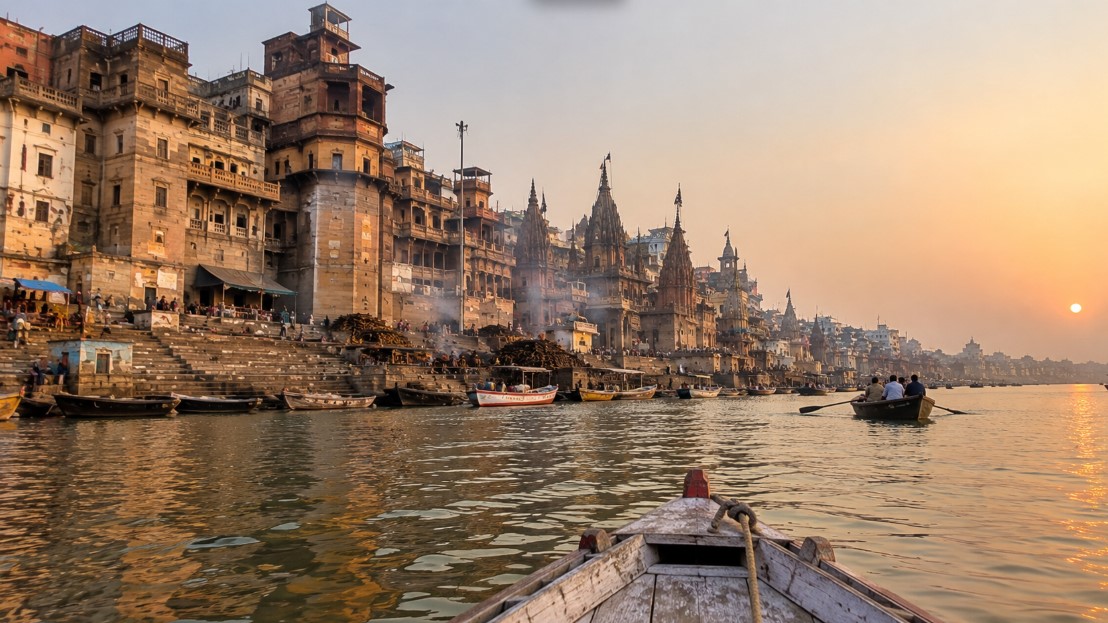
Boat view of the ghats of Varanasi from the River Ganga
Best Time to Visit the Varanasi Ghats
The experience changes according to the time of day and season.
Early morning is popular along the wider riverfront because temperatures can be more comfortable and religious activity begins early.
Evenings are especially busy around Dashashwamedh because of the Ganga Aarti.
The cremation ground is different. It should not be approached as a scheduled performance with a “best show time.” Its purpose is funeral and religious activity.
If your primary goal is sightseeing, architecture and photography, you may find other parts of the riverfront more suitable.
Read about: Best Places to Visit Based on Your Horoscope AstroClick Travel Map
What is the Difference Between Varanasi, Banaras and Kashi?
Visitors often wonder whether these names refer to different places.
They generally refer to the same city, although each name carries different historical and cultural associations.
Varanasi is the official modern name.
Banaras, also written Benares or Benaras, is a widely recognised historical and colloquial name.
Kashi is the ancient sacred name and remains commonly used in religious contexts.
The Varanasi district administration itself describes the city as “Varanasi, or Benaras, (also known as Kashi).”
Therefore, searches for Manikarnika Ghat Banaras, Varanasi or Kashi generally refer to the same famous location.
Religious Beliefs About Death in Kashi
The relationship between death and Varanasi is based on Hindu religious belief rather than simply local funeral practice.
Kashi is traditionally associated with Shiva, and many Hindus believe death there has special spiritual significance.
Official Varanasi tourism information describes the traditional belief that dying in the city can bring salvation and freedom from rebirth.
It is important to phrase this accurately.
This is a religious belief. It should not be presented as a scientifically verifiable outcome or as something every Hindu interprets in exactly the same way.
Hinduism includes many traditions and regional practices, so individual beliefs and funeral customs can differ considerably.
Why are Cremations Performed Beside the Ganga?
The Ganga has exceptional religious importance in Hinduism.
Water from the river is used in numerous rituals, and pilgrimage to the Ganga has been part of religious life for generations.
Varanasi’s relationship with the river is especially significant because the sacred geography of Kashi combines the Ganga with temples, pilgrimage routes and sites associated with Shiva.
The funeral practices at the city’s cremation ghats therefore take place within this broader religious setting.
Does Manikarnika Operate All Day?
It is commonly described as an active cremation ground where funeral activity continues for long periods, including outside normal tourist-attraction hours.
However, visitors should avoid relying on claims such as a precise number of cremations per day unless those figures come from a current authoritative source. Numbers published by travel blogs and social-media accounts can vary substantially.
The important point is that this remains an active funeral location rather than a historical cremation site preserved only for visitors.
Common Myths and Misunderstandings
Online content about the ghat sometimes mixes documented history, religious tradition and dramatic travel stories.
Keeping those categories separate produces a more accurate understanding.
Religious stories involving Shiva, Parvati and Vishnu belong to Hindu tradition. Historical information about construction and reconstruction comes from inscriptions, records and later documentation.
Similarly, claims about an “eternal fire” are frequently repeated in travel writing. Such claims are often presented through religious tradition and should not automatically be converted into precise historical statements about an uninterrupted flame lasting a specific number of years.
Responsible writing should identify belief as belief and documented history as history.
Nearby Places to Visit
Someone exploring the riverfront can combine a respectful visit with several nearby religious and historical locations.
Kashi Vishwanath Temple
Dedicated to Lord Shiva, this is one of the city’s major pilgrimage destinations. The official temple trust provides current information about darshan, aarti and visitor services.
Dashashwamedh Ghat
This ghat is famous for its evening Ganga Aarti. India’s tourism portal notes that visitors can continue from Dashashwamedh toward Manikarnika, where cremation rites take place.
Scindia Ghat
Located near Manikarnika, Scindia forms another part of the historic riverfront and can be included while walking through the area.
Assi Ghat
Farther south, Assi has a different atmosphere and is known for religious and cultural activity, particularly around sunrise.
Sarnath
Sarnath lies outside the central ghat area but is one of the region’s most important Buddhist sites. It is traditionally associated with the place where the Buddha delivered his first sermon after enlightenment. The Varanasi district administration places Sarnath about 10 km from the city.
Frequently Asked Questions
Where is Manikarnika Ghat?
It is located on the bank of the River Ganga in Varanasi, Uttar Pradesh, India, between Dashashwamedh and Scindia ghats according to India’s official tourism portal.
Why is Manikarnika Ghat famous?
It is one of Hinduism’s most sacred cremation grounds and is closely connected with traditional beliefs about death, final rites and moksha in Kashi.
Is Manikarnika Ghat in Banaras?
Yes. Banaras is another commonly used name for Varanasi. Kashi is another traditional name for the city.
Is it a crematorium?
It is better described as a traditional Hindu cremation ground. Cremations take place beside the Ganga as part of funeral rites.
What is Manikanta Ghat?
When the term is used in searches about Varanasi’s famous cremation site, it is often likely to be a mistaken variation of Manikarnika. Official government and tourism sources identify the Varanasi site as Manikarnika Ghat.
Are Manikarnika and Harish Chandra Ghat the same?
No. They are separate cremation ghats in Varanasi. Official tourism information describes Harish Chandra as smaller and notes that an electric crematorium was established there in the 1980s.
Can tourists visit?
Visitors can explore the riverfront area, but they should remember that active funerals and religious ceremonies take place there. Respect for grieving families is essential.
Can you take photos?
Visitors should avoid photographing bodies, active cremations and grieving relatives. Rules and circumstances can change, so local instructions should always be followed.
What is Manikarnika Kund?
It is a sacred kund at the ghat associated with Lord Vishnu in Hindu tradition. The Shri Kashi Vishwanath Temple Trust also refers to it as Chakra Pushkarini Kund.
How many ghats are there in Varanasi?
The Varanasi district administration states that the city has 88 ghats. Most are associated with bathing and puja, while two are specifically used as cremation sites.
Visiting With Respect
A first-time visitor may find the cremation rituals very different from funeral practices in their own culture.
The appropriate response is respect, not curiosity without boundaries.
Families at the site are dealing with death and performing religious duties. Visitors should give them space, keep conversations quiet and avoid interfering with ceremonies.
The same principle applies when writing about or sharing images of the area online. Educational photographs of the architecture, riverfront and wider surroundings can explain the location without displaying identifiable grieving people or deceased individuals.
Final Thoughts
Manikarnika Ghat is one of the most significant religious locations along the Ganga in Varanasi. Its importance comes from the combination of Hindu funeral traditions, beliefs surrounding moksha, its association with Shiva and Vishnu, the sacred Manikarnika Kund and its place within the wider religious geography of Kashi.
Its history also contains several layers. Religious traditions associated with the location extend far into the past, while surviving records and official sources describe stone construction and later rebuilding across different historical periods. The Shri Kashi Vishwanath Temple Trust notes evidence of stone construction around the beginning of the 14th century and reconstruction supported by Bajirao Peshwa during the 18th century.
For travellers, understanding the purpose of the location before visiting is essential. It is not simply another stop on a sightseeing itinerary. It remains an active place of mourning, worship and final rites.
The wider Kashi ghat area offers many other experiences, including temples, river journeys, morning rituals and Ganga Aarti. At the cremation grounds, however, visitors should place dignity and privacy first.
With accurate information and appropriate respect, the site offers important context for understanding Varanasi’s religious traditions and the role the Ganga, death, and pilgrimage have played in the city’s cultural life for generations.
Read more: How to Travel the World on a Weekend: 48‑Hour Itineraries



Eileen Gu: Age, Parents, 2026 Olympics, Modeling Career, Height and Personal Life

18Moa – Website Directories, Online Discovery, and Safer Browsing

Understanding the American XL Bully Ban in the UK: Rules and Changes in 2026

Best UI/UX Design Agencies for Enterprise Products in 2026

Broken Keyboard Grok Answer: How to Understand and Solve the Coding Problem
-
 Celebrity4 weeks ago
Eileen Gu: Age, Parents, 2026 Olympics, Modeling Career, Height and Personal Life
-
 Tech4 weeks ago
18Moa – Website Directories, Online Discovery, and Safer Browsing
-
 Animals4 weeks ago
Understanding the American XL Bully Ban in the UK: Rules and Changes in 2026
-

 Tech2 months ago
WhatsApp Chat Theme Not Showing? How to Fix It