
Auto
Ferrari SF90 Spider: Specs, Price, Performance, and Features

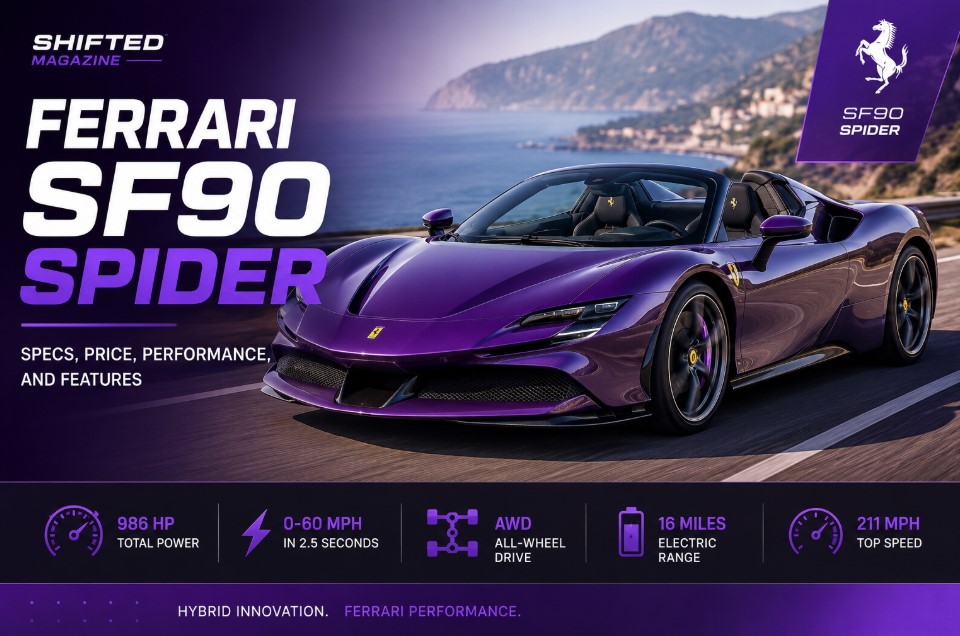
The Ferrari SF90 Spider represents one of the most advanced road cars ever produced by Ferrari. Combining hybrid technology, exceptional performance, open-top driving, and modern engineering, this supercar has established itself as a benchmark within the high-performance automotive segment.
As the convertible version of the SF90 Stradale, the vehicle delivers the same impressive capabilities while adding the excitement of open-air driving. It was designed to showcase Ferrari’s expertise in hybrid powertrains, aerodynamics, lightweight construction, and driving dynamics.
This guide explores the vehicle’s specifications, engine technology, performance figures, design elements, interior features, ownership considerations, and market position. Whether you are an automotive enthusiast, collector, or potential buyer, understanding what makes this model unique can help explain why it remains one of Ferrari’s most desirable modern supercars.
Ferrari SF90 Spider Overview
The Ferrari SF90 Spider was introduced as Ferrari’s first series-production plug-in hybrid convertible. The name SF90 pays tribute to the Scuderia Ferrari Formula One team and commemorates the brand’s 90th anniversary.
Unlike traditional supercars powered solely by internal combustion engines, this model combines a twin-turbocharged V8 engine with multiple electric motors. The result is a system that delivers extraordinary performance while incorporating advanced hybrid technology.
The vehicle sits at the top of Ferrari’s road-car lineup and represents a major step in the company’s electrification strategy.
Specifications
| Specification | Details |
| Manufacturer | Ferrari |
| Body Style | Convertible Supercar |
| Engine | 4.0L Twin-Turbocharged V8 |
| Electric Motors | 3 |
| Total Power Output | 986 hp |
| Transmission | 8-Speed Dual-Clutch |
| Drivetrain | All-Wheel Drive |
| Battery | Lithium-Ion |
| Top Speed | 211 mph |
| 0-60 mph | Around 2.5 seconds |
| Electric Range | Approximately 16 miles |
Exterior Design
The exterior design combines aerodynamic efficiency with Ferrari’s distinctive styling language.
Every element serves a performance purpose while maintaining visual appeal.
Key design characteristics include:
- Sculpted bodywork
- Active aerodynamic components
- Sharp front fascia
- Integrated air channels
- Low ride height
- Wide rear stance
- Lightweight construction
Ferrari engineers focused on reducing drag while generating sufficient downforce to maintain stability at high speeds.
The result is a vehicle that performs effectively on both public roads and racing circuits.
Retractable Hardtop Roof
One of the most significant features is the retractable hardtop roof.
Unlike fabric convertible roofs, Ferrari selected an aluminum hardtop system that offers several advantages:
- Improved insulation
- Enhanced security
- Better aerodynamic efficiency
- Increased durability
- Reduced wind noise
The roof can be opened or closed in approximately 14 seconds and can operate while the vehicle is moving at moderate speeds.
This feature allows drivers to enjoy open-air motoring without sacrificing practicality.
Hybrid Powertrain Technology
The most innovative aspect of the car is its hybrid system.
The powertrain combines:
- A 4.0-liter twin-turbocharged V8 engine
- Two front electric motors
- One rear electric motor
Together, these components generate a combined output of approximately 986 horsepower.
The internal combustion engine alone produces around 769 horsepower, while the electric motors contribute additional performance and efficiency.
This setup enables instant torque delivery and rapid acceleration.
Electric Driving Capability
The hybrid system also allows the vehicle to operate in electric-only mode.
Benefits include:
- Reduced fuel consumption
- Quiet urban driving
- Lower emissions
- Improved efficiency
Although electric range is limited compared to dedicated electric vehicles, the feature adds flexibility and technological sophistication.
Performance Specifications
Performance remains the primary reason many buyers consider this Ferrari.
The combination of hybrid technology and advanced engineering produces remarkable results.
Acceleration
Performance figures include:
- 0-60 mph in approximately 2.5 seconds
- 0-124 mph in under 7 seconds
- Quarter-mile times under 10 seconds
These figures place the car among the fastest production vehicles available.
Top Speed
The vehicle reaches a top speed of approximately 211 mph.
This capability reflects Ferrari’s extensive motorsport experience and aerodynamic expertise.
Power Delivery
The hybrid system delivers immediate acceleration due to electric motor assistance.
Drivers experience:
- Instant throttle response
- Strong low-end torque
- Smooth power transitions
- Enhanced traction
These characteristics contribute to a highly engaging driving experience.
All-Wheel Drive System
Unlike many traditional Ferrari models, this vehicle utilizes an advanced all-wheel-drive configuration.
The system helps maximize traction during acceleration and cornering.
Advantages include:
- Improved stability
- Enhanced grip
- Better wet-weather performance
- Increased driver confidence
The front electric motors play a key role in distributing power efficiently across all four wheels.
This technology contributes significantly to the vehicle’s exceptional acceleration figures.
Aerodynamics and Engineering
Aerodynamic efficiency plays a critical role in overall performance.
Ferrari engineers developed multiple systems to optimize airflow.
Key aerodynamic features include:
- Active rear spoiler
- Front air channels
- Underbody airflow management
- Rear diffuser
- Cooling ducts
These elements work together to increase stability and reduce aerodynamic drag.
At high speeds, aerodynamic performance becomes essential for maintaining control and driver confidence.
Lightweight Construction
Weight reduction remains important despite the addition of hybrid components.
Ferrari incorporated various lightweight materials throughout the vehicle.
Examples include:
- Aluminum body panels
- Carbon fiber components
- Lightweight wheels
- Performance braking systems
Reducing unnecessary weight improves:
- Acceleration
- Handling
- Braking
- Efficiency
The balance between power and weight helps maximize overall performance.
Interior Design
The cabin combines modern technology with premium craftsmanship.
Unlike older Ferrari interiors that focused primarily on analog controls, this model incorporates advanced digital systems.
Key interior features include:
- Digital instrument cluster
- Multifunction steering wheel
- Premium materials
- Sport seats
- Driver-focused layout
- Touch-sensitive controls
The cabin is designed to keep the driver informed while minimizing distractions.
Passenger Comfort
Although performance remains the priority, the vehicle also provides a comfortable environment for occupants.
Features include:
- Climate control
- Premium upholstery
- Adjustable seating
- Advanced connectivity options
These additions improve everyday usability.
Technology Features
Modern technology is integrated throughout the vehicle.
Digital Instrument Display
The large digital display provides information regarding:
- Speed
- Battery status
- Navigation
- Driving modes
- Performance metrics
Infotainment System
Available functions include:
- Smartphone integration
- Navigation services
- Bluetooth connectivity
- Media controls
Driver Assistance Systems
Technology features include:
- Parking sensors
- Rear-view camera
- Stability control systems
- Traction management systems
These tools enhance convenience while maintaining the vehicle’s performance-oriented character.
Driving Modes
The hybrid system allows drivers to select different operating modes.
eDrive
Electric-only operation for short-distance travel.
Hybrid Mode
Automatically balances engine and electric motor usage.
Performance Mode
Prioritizes performance while maintaining battery charge.
Qualify Mode
Delivers maximum power output for aggressive driving situations.
Each mode offers a unique driving experience.
Ownership Experience
Owning a Ferrari involves more than performance statistics.
Potential buyers should consider maintenance, insurance, and long-term ownership costs.
Maintenance Requirements
Regular servicing includes:
- Oil changes
- Brake inspections
- Tire replacement
- Battery system checks
- Software updates
Ferrari’s maintenance programs help simplify ownership during the initial years.
Insurance Costs
Insurance premiums depend on factors such as:
- Driver profile
- Location
- Usage
- Coverage levels
Because of the vehicle’s value and performance capabilities, insurance expenses can be substantial.
Reliability Considerations
Modern Ferrari vehicles have benefited from significant engineering improvements.
Proper maintenance remains essential for preserving reliability and long-term value.
Market Value and Pricing
One of the most frequently searched topics is the Ferrari SF90 Spider price.
When introduced, the vehicle carried a starting price exceeding $550,000 before optional equipment and customization.
Factors affecting market value include:
- Vehicle condition
- Mileage
- Service history
- Exterior specifications
- Interior options
- Market demand
Highly customized examples can command significantly higher prices.
Limited production numbers and strong demand have helped maintain value in many markets.
Competitor Comparison
Several vehicles compete within the same segment.
McLaren 765LT Spider
Advantages:
- Lower weight
- More focused track character
Ferrari strengths:
- Hybrid technology
- All-wheel drive
- Greater power output
Check out more details from here.
Lamborghini Revuelto
Advantages:
- Naturally aspirated V12 engine
- Distinctive styling
Ferrari strengths:
- More refined hybrid integration
- Advanced aerodynamics
Porsche 918 Spyder Legacy Comparison
Although no longer in production, comparisons are often made due to hybrid performance capabilities.
Ferrari offers:
- Newer technology
- Higher output
- Modern digital systems
Each competitor appeals to different buyer preferences.
Collectability and Long-Term Value
Collectors increasingly view modern hybrid supercars as significant milestones in automotive history.
Reasons include:
- Advanced engineering
- Limited production
- Historical significance
- Strong performance
- Brand prestige
The model represents Ferrari’s transition toward electrified performance vehicles.
This historical importance may contribute to long-term collector interest.
Frequently Asked Questions
What engine powers the Ferrari SF90 Spider?
The vehicle uses a 4.0-liter twin-turbocharged V8 engine paired with three electric motors.
How much power does the Ferrari SF90 Spider produce?
Combined output is approximately 986 horsepower.
What is the top speed?
The vehicle can reach approximately 211 mph.
Is it all-wheel drive?
Yes. The hybrid system incorporates an advanced all-wheel-drive configuration.
Can the Ferrari SF90 Spider drive using electricity alone?
Yes. The vehicle includes an electric-only driving mode suitable for short distances.
How much does it cost?
Pricing varies based on specifications and market conditions, but original pricing exceeded $550,000 before options.
Final Thoughts
The Ferrari SF90 Spider stands as one of the most technologically advanced vehicles ever produced by Ferrari. Combining hybrid innovation, exceptional power, open-top driving, and advanced aerodynamics, it delivers a unique experience that few vehicles can match. Its sophisticated powertrain, all-wheel-drive system, premium interior, and remarkable performance figures demonstrate Ferrari’s commitment to pushing automotive technology forward.
For enthusiasts seeking a supercar that combines innovation, luxury, and extreme performance, this model remains one of the most compelling options available today. As the automotive industry continues evolving toward electrification, the SF90 Spider represents an important chapter in Ferrari’s history and a benchmark for future performance vehicles.



Eileen Gu: Age, Parents, 2026 Olympics, Modeling Career, Height and Personal Life

18Moa – Website Directories, Online Discovery, and Safer Browsing

Understanding the American XL Bully Ban in the UK: Rules and Changes in 2026

Best UI/UX Design Agencies for Enterprise Products in 2026

Broken Keyboard Grok Answer: How to Understand and Solve the Coding Problem
-
 Celebrity3 weeks ago
Eileen Gu: Age, Parents, 2026 Olympics, Modeling Career, Height and Personal Life
-
 Tech3 weeks ago
18Moa – Website Directories, Online Discovery, and Safer Browsing
-
 Animals3 weeks ago
Understanding the American XL Bully Ban in the UK: Rules and Changes in 2026
-

 Finance2 months ago
Loan Officer’s Guide: How to Calculate Self-Employed Income?