
Entertainment
Who is Shawn Ryan? Background, Podcast Format, and a Guide for Listeners
Learn about Shawn Ryan’s background, the format of his interview show, its topics, and how to assess long-form conversations responsibly.

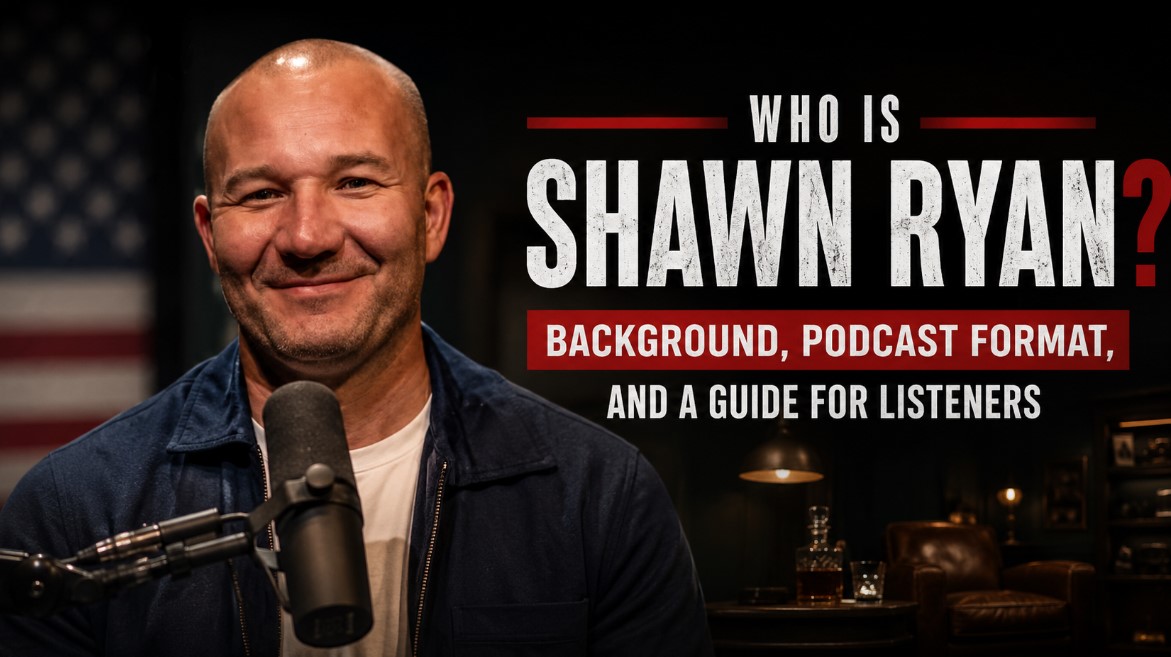
Shawn Ryan is an American media host and the founder of Vigilance Elite. He is widely known for creating and hosting a long-form interview program that features conversations with veterans, journalists, public officials, researchers, authors, and people with unusual personal experiences. His professional background before media includes service in the United States Navy and later work as a contractor. That experience has shaped the types of guests and subjects that appear in his work.
Many people discover the program through a short clip on YouTube or social media. The full interviews are different from a short clip. They are often lengthy, cover difficult subjects, and move between personal history, military service, current affairs, health, business, or culture. This article explains the host’s background, the format of the program, why it attracts attention, and how listeners can approach claims made in any long-form interview with care.
The aim is to give a practical and factual overview. It does not treat a guest’s statement as confirmed simply because it appears in an interview. A good listener can value a personal account while still checking public claims against reliable records and original sources.

Who is Shawn Ryan?
According to the official biography on the program’s website, Ryan is the founder of Vigilance Elite and the creator and host of The Shawn Ryan Show. The biography describes him as a former U.S. Navy SEAL and former CIA contractor. His official Apple Podcasts listing also presents the show as a place for candid conversations with people from different walks of life.
His path into media came after a career connected to military and security work. That history helps explain why former service members, security professionals, and people with first-hand experience of conflict appear regularly in the catalogue. Over time, the guest list has become wider. Interviews can include journalists, policy figures, athletes, entrepreneurs, researchers, and people discussing personal recovery or public events.
It is useful to separate three parts of his public work: his personal background, the Vigilance Elite business, and the interview channel. They are connected, but each has a different purpose. A listener interested in an interview does not need to agree with every view expressed by the host, guest, sponsor, or audience community.
From military service to a media platform
The official biography says Ryan entered the Navy with the aim of becoming a SEAL, served with SEAL Teams 2 and 8, and later worked as a contractor. These experiences are often part of the context in his interviews. They also help him ask detailed questions about training, military culture, deployment, transition to civilian life, and the impact of stressful work.
That does not mean every conversation is about military subjects. The program’s appeal comes partly from its range. A guest may discuss professional decisions, personal setbacks, a public controversy, a historical event, or a specialist field. The host generally gives guests time to explain their background instead of limiting the exchange to short answers. This long format can be useful when it produces a clear timeline, but it can also make a conversation difficult to assess when claims are complex.
For that reason, listeners should distinguish between experience and evidence. A guest may be the best available source for their own feelings, memories, or reasons for making a decision. However, a claim about a public event, a scientific result, a legal matter, or another person still needs separate evidence. This is a sensible rule for every interview platform, not only this one.
What is the format of the show?
The Shawn Ryan Show is built around extended conversations rather than brief news segments. Episodes may begin with a guest’s early life and career, then move through major events and current views. The pace is usually patient. Hosts and guests can return to an earlier point when additional context is needed. For viewers who want a full account, this can be more useful than a short televised appearance.
The style also creates a responsibility for the audience. A long episode can feel more convincing because it includes emotion, detail, and personal history. Those qualities matter, but they are not a substitute for verification. A statement can be sincere and still be incomplete, mistaken, or disputed. The strongest approach is to listen carefully, note key claims, and check the claims that affect your understanding of an issue.
Long video interviews are now a major part of digital culture. Clips help them travel quickly across platforms, while full versions give creators room to keep an audience engaged. If you are building a media project yourself, our guide to promoting a podcast on TikTok explains why short clips can introduce an audience to a longer conversation.
Common topics listeners can expect
The programme’s catalogue includes a broad mix of subject areas. Not every episode will suit every listener, so it helps to choose based on the guest’s expertise and the question you want answered. The following topic groups are a useful starting point.
- Military service, veterans’ experiences, leadership, and the move to civilian life.
- Security, emergency response, geopolitics, and public policy.
- Journalism, public institutions, law, and current events.
- Personal recovery, discipline, health experiences, and career changes.
- Business, technology, sport, exploration, and other specialist careers.
Topic range is one reason the channel reaches people who do not share the same interests. A former service member might watch a conversation about transition after deployment, while another viewer may choose an interview with a journalist or technology professional. Selecting an episode by subject is usually more useful than relying on viral clips or comment sections.
Why the interviews attract attention
Several factors explain the platform’s popularity. First, guests often have direct knowledge of a field that is unfamiliar to most viewers. Second, the long format can reveal more context than a short news interview. Third, viewers may feel that difficult questions are given more time than they would receive in a fast-paced broadcast. The programme is available across major audio and video platforms, which makes it easy to watch a full interview or return to it later.
There are limits to these strengths. A detailed interview is not the same as an investigation, a court record, an academic study, or a report with multiple independent sources. The host’s questions can add context, but they do not independently prove every answer. This is particularly important when an episode covers political issues, intelligence, health claims, alleged events, or disputed public history.
Short clips can remove context even further. A clip may leave out the question that led to a reply, the qualification that followed, or a correction later in the episode. Before sharing a notable quote, open the full video, check the timestamp, and listen to the surrounding discussion. Our article about why a YouTube video may be removed also shows why platform availability alone does not establish whether a claim is true or false.
How to choose useful episodes
There is no single list of best episodes for every listener. The right choice depends on your interest, the guest’s expertise, and whether you are looking for a personal story, professional insight, or discussion of a current issue. Start with an official episode page or the verified channel, read the guest description, and decide what you expect to learn.
For a practical first selection, choose an episode with a guest whose background is clear and whose topic can be checked using other sources. A public author, a researcher with published work, or a professional discussing their own career can be easier to evaluate than an episode built around a broad unresolved claim. Then compare the episode description with the guest’s own website, published work, or official organisation.
Use this simple selection checklist:
- Read the full episode title and description, not only the thumbnail text.
- Check the guest’s background from a reliable source outside the channel.
- Choose a topic you want to understand, not merely a viral claim.
- Save the full episode and return when you have time to listen carefully.
- Write down claims that need verification before accepting or sharing them.
This method helps viewers benefit from an interview without being pushed by online urgency. It also makes discussion with friends or colleagues more useful because the conversation can focus on the actual evidence, not a short excerpt.

How to assess a long-form conversation responsibly
Start with the type of claim. Personal experience, opinion, and fact need different responses. A guest describing their own career is sharing a first-hand account. A guest stating a number, a historical event, a medical outcome, or a legal allegation is making a claim that may be checked elsewhere. Do not treat all statements as equal.
Next, look for primary sources. For government matters, look for official documents and public records. For academic claims, look for the research paper, reputable review, or specialist organisation. For legal matters, look for court records or reporting that clearly identifies its sources. For business claims, look for filings, official statements, or reliable financial reporting. If a source is missing, describe the idea as unverified rather than confirmed.
It is also useful to consider incentives. Every media platform has editorial choices, sponsors, audience expectations, and a particular style. That does not automatically make an interview unreliable. It simply means that listeners should understand the setting. Ask what information is presented, what is not addressed, and whether someone with a different view has been represented fairly.
Digital literacy is a learned skill. It includes knowing how recommendation systems, social clips, headlines, and emotional storytelling can guide attention. The same skill matters for young audiences and adults. Our overview of digital literacy and smartphone use explains why thoughtful media habits are important in an always-connected environment.
Political guests and contested discussions
Political interviews often generate the most searches and comments. Public figures can bring their own views, campaign goals, professional history, and disagreements with critics. When an episode involves a politician, such as a discussion linked by viewers to Dan Crenshaw, treat it as a source of the participant’s stated position rather than a final account of the issue. Check official statements, legislative records, reputable reporting, and direct responses from people involved.
A balanced approach is not about avoiding difficult topics. It is about being precise. Separate what the guest said, what the host asked, what other sources confirm, and what remains disputed. This makes it easier to learn from a challenging conversation without turning an interview into a substitute for wider research.
Questions about wealth, family, and the future of the show
Search engines often surface questions about a host’s income, spouse, or whether a programme is ending. These topics can attract clicks, but reliable public evidence may be limited. There is no independently verified public figure for Ryan’s personal net worth that readers should treat as definitive. Estimates on unverified websites can differ widely and should not be reported as fact.
Family details should also be handled with care. A public host may choose to discuss some personal experiences while keeping a spouse, children, or home life private. Unless the person has clearly and reliably made a detail public, it is better to focus on their professional work than repeat speculation.
As of July 2026, the official website continues to list newly published episodes and the official channel remains active. That does not support claims that the programme is ending. Future schedules can change, so check the official website or verified channel for announcements rather than relying on search snippets, reposts, or anonymous social accounts.
What the show means for modern interview media
The success of long-form interview channels shows that many people will spend time with a detailed conversation when they believe a guest has something meaningful to explain. It also shows why creators need clear episode descriptions, reliable publishing practices, and responsible editing. A complete conversation is valuable, but listeners still need the skills to assess what they hear.
For creators, the lesson is that trust is built over time. Clear sourcing, corrections when needed, accurate titles, and a distinction between fact and opinion help an audience make better decisions. For viewers, the lesson is similar: give a conversation time, check important claims, and do not let a strong clip replace the full context.

Final thoughts
Shawn Ryan is known for building a long-form interview platform after a career in military and security-related work. His programme brings together guests from many fields and gives them time to tell their stories in detail. That format can be useful for learning about personal experience and specialist careers. It is most valuable when listeners also use careful source-checking, full-episode context, and independent research for important claims. Choose interviews by topic, listen beyond the clips, and use verified sources when a statement could affect how you understand a public issue.



Eileen Gu: Age, Parents, 2026 Olympics, Modeling Career, Height and Personal Life

18Moa – Website Directories, Online Discovery, and Safer Browsing

Understanding the American XL Bully Ban in the UK: Rules and Changes in 2026

Best UI/UX Design Agencies for Enterprise Products in 2026

Broken Keyboard Grok Answer: How to Understand and Solve the Coding Problem
-
 Celebrity4 weeks ago
Eileen Gu: Age, Parents, 2026 Olympics, Modeling Career, Height and Personal Life
-
 Tech4 weeks ago
18Moa – Website Directories, Online Discovery, and Safer Browsing
-
 Animals4 weeks ago
Understanding the American XL Bully Ban in the UK: Rules and Changes in 2026
-

 Tech2 months ago
WhatsApp Chat Theme Not Showing? How to Fix It