
Health
Why Women Need More Protein Than They Realize for Healthy Hair

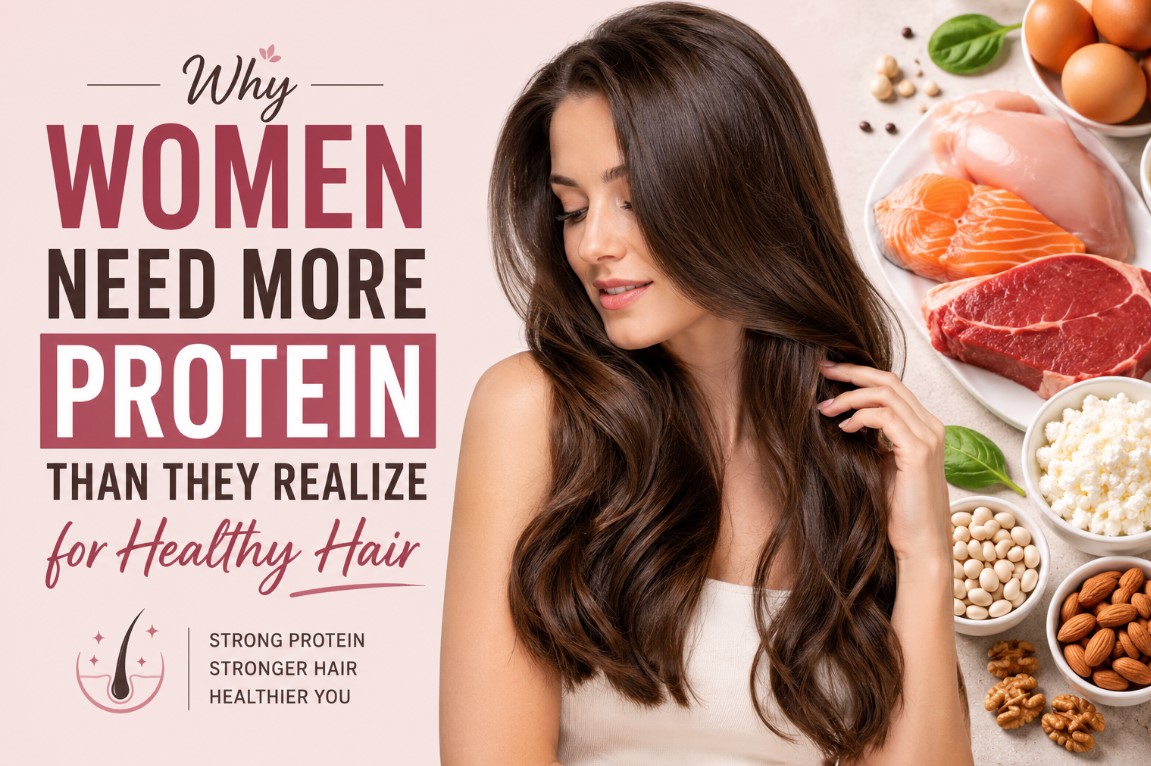
Most women who experience hair thinning, excessive shedding, or dull, lifeless strands spend a lot of time looking for the right shampoo or oil. Very few stop to think about what they’re eating — specifically, whether they’re getting enough protein. And that gap in understanding might be the reason so many hair problems go unresolved for years.
Hair is Almost Entirely Made of Protein
The structure of your hair strand is built almost entirely from a protein called keratin. Every strand that grows from your scalp depends on a steady supply of amino acids — the building blocks that your body uses to produce keratin. When that supply is low, the body makes a logical but frustrating choice: it redirects available protein to more critical functions like organ repair and immune support. Hair, which the body doesn’t consider essential for survival, gets deprioritized.
This is why protein deficiency doesn’t just slow hair growth — it can push a large number of hair follicles into the resting phase at the same time, causing what’s known as telogen effluvium. The shedding that follows usually appears two to three months after the nutritional gap, which makes it hard to connect the cause to the effect.
Why Women Are Particularly Vulnerable
Women are at higher risk of under-eating protein for several reasons. Culturally, protein-heavy foods are often associated with bodybuilding or weight gain, which leads many women to unconsciously avoid them. Additionally, women tend to eat fewer calories overall, which naturally reduces protein intake.
Certain life stages make this even more critical:
- During menstruation, the body loses iron and needs additional support from protein-rich foods to rebuild red blood cells that carry oxygen to follicles
- During pregnancy and postpartum, protein demands increase significantly, and hair loss after delivery is often worsened by depleted protein stores
- During perimenopause and menopause, hormonal shifts make hair follicles more sensitive, and low protein amplifies this vulnerability
Each of these phases can independently trigger hair loss. Combined with low protein intake, the impact on hair becomes considerably more pronounced.
How Much Is Actually Enough
The standard dietary guideline of 0.8 grams of protein per kilogram of body weight is a minimum — it’s meant to prevent deficiency, not to support active cellular repair, hair growth, or recovery from hormonal stress. Most nutritionists and trichologists suggest that women aiming for healthy hair need closer to 1.2 to 1.6 grams per kilogram of body weight per day.
If you’re unsure where you currently stand, using a protein intake calculator can help you get a clearer picture of your daily requirements based on your body weight and lifestyle.
Consistently reaching this range through food — eggs, lentils, paneer, Greek yogurt, chicken, tofu, fish — makes a measurable difference in how your scalp behaves over time.
The Connection Between Protein and Hair Cycles
Hair grows in cycles: anagen (growth), catagen (transition), and telogen (rest). The length and quality of the growth phase is directly tied to how well-nourished the follicle is. When protein intake is consistently low, the anagen phase shortens. You don’t just lose more hair — the hair that does grow comes out finer and more fragile.
Over time, this creates a pattern that looks a lot like genetic thinning. But in many cases, it’s nutritional. The difference matters because genetic thinning requires one kind of approach, while nutritional hair loss can often be significantly improved by addressing what the body is missing.
Treating the Root Cause, Not Just the Symptom
When women seek help for hair loss, the conversation often jumps straight to topical treatments. These have their place, but they work best when the internal environment supports them. Solutions like Traya for women hair treatment combine nutritional guidance alongside targeted treatment plans precisely because hair health is rarely just a scalp issue — it’s a whole-body issue.
Getting the protein piece right doesn’t fix everything. But it removes one of the most common and overlooked obstacles to real recovery.
Final Thoughts
If your hair has been shedding more than usual, growing slowly, or feeling thinner than it used to, your first question shouldn’t be which product to try. It should be whether your body has what it needs to build healthy hair in the first place. Protein is a foundational part of that answer — and for most women, the daily intake falls short of what the body actually needs.
Start there. It’s simpler than it sounds, and the results often surprise people.


How to Choose an Ergonomic Office Chair for Women That Actually Fits

Top Movies and TV Shows in the US: JustWatch September 2026 Streaming Charts

5 Best Indoor Air Quality & Mold Companies in Houston (2026)

The Spreadsheet Habit That Quietly Breaks Business Dashboards as Teams Scale

Marie-France Ward: Fred Ward’s Wife, Marriage, Family, Age and Life After His Death
-

 Celebrity1 month ago
Eileen Gu: Age, Parents, 2026 Olympics, Modeling Career, Height and Personal Life
-

 Tech1 month ago
18Moa – Website Directories, Online Discovery, and Safer Browsing
-

 Animals1 month ago
Understanding the American XL Bully Ban in the UK: Rules and Changes in 2026
-

 Tech2 months ago
WhatsApp Chat Theme Not Showing? How to Fix It