
Dentist
Clear Aligners and the Rise of “Invisible” Self-Improvement

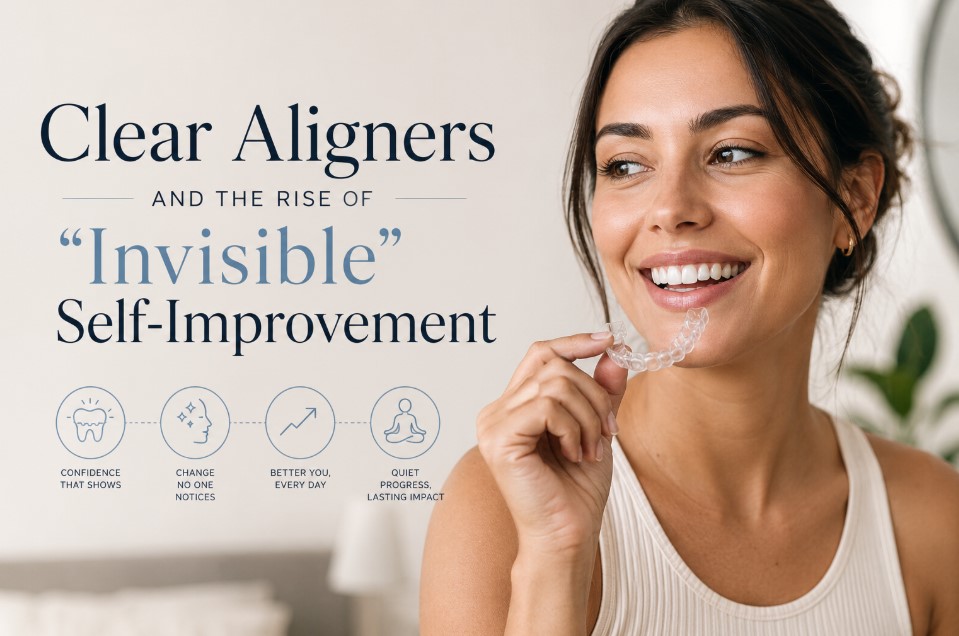
There’s a particular flavor of self-improvement that’s quietly taken over the last decade. It doesn’t announce itself. It doesn’t ask for an audience. The gym selfie and the dramatic before-and-after have given way to something subtler: changes you make for yourself, that no one’s supposed to clock until they’re done. Clear aligners sit right at the center of that shift.
Think about how teeth straightening used to work. Metal brackets, visible wires, the whole face announcing to a room that this person is in the middle of fixing something. For a teenager, fine. For an adult, it was a public declaration most weren’t willing to make. So millions of people simply lived with crooked teeth they’d quietly disliked for years, because the cure was louder than the problem.
The Quiet Revolution
Clear aligners changed the math entirely. Suddenly, the process of straightening your teeth could happen almost invisibly, tucked into a normal life, with no one the wiser until the result showed up on its own. That’s not a small thing. It removed the single biggest barrier that kept adults away from treatment for generations: the dread of looking like a teenager with a mouthful of metal in the conference room.
And it fits the mood of the moment perfectly. We’ve moved away from loud, performative reinvention toward something quieter and more private. People are improving their sleep, their finances, their fitness, their skin, often without saying a word about it. The aligner belongs to that same family. It’s self-improvement that respects your privacy.
Why “Invisible” Resonates Right Now
There’s something genuinely appealing about a change that doesn’t demand explanation. When the work is invisible, you skip the awkward questions, the unsolicited opinions, the feeling of being watched mid-process. You just show up one day with a better version of something, and people notice the outcome without ever having watched the construction.
This matters more than it sounds. A lot of people abandon self-improvement projects not because the work is too hard, but because the visibility of the work is uncomfortable. Being seen struggling, being seen mid-transformation, invites judgment and pressure. Remove the visibility and you remove a surprising amount of the friction.
The Psychology of a Private Project
When something is yours alone, the stakes feel different. You’re not performing progress for anyone. There’s no audience to disappoint if it goes slowly. That privacy can make people more likely to start and more likely to stick with it, precisely because the pressure is internal rather than external.
Aligners lean into this beautifully. You wear them most of the day, take them out to eat, pop them back in, and carry on. The whole arc unfolds in the background of your actual life rather than in the spotlight.
It’s Not Vanity, It’s Confidence Infrastructure
It’s easy to wave all this off as vanity, but that misreads what’s happening. People who feel self-conscious about their teeth tend to manage it constantly in small, exhausting ways. They smile carefully. They angle away from cameras. They hold something back in conversations without quite realizing they’re doing it. That low-grade self-monitoring is a tax paid all day, every day.
Fixing the underlying thing doesn’t make someone shallow. It frees up the attention they were spending on hiding. That’s why the people who go through with it so often describe the change in terms that have nothing to do with their teeth: they feel more present, more willing to be in the photo, less guarded. The smile was just the lever.
The Practical Reality
None of this means aligners are magic or right for everyone. They demand discipline, since they only work if you actually wear them for the recommended hours each day. They suit some dental cases better than others, and a consultation is the only honest way to know where you fall. The “invisible” part is real, but it isn’t effortless.
Still, for the right person, the appeal is obvious. It’s a way to address something that’s quietly bothered you for years, on your own terms, without turning it into a public event. For anyone curious about how it might work for their situation, it’s worth taking a moment to explore your options in Bristol CT and see what a treatment plan might actually look like before deciding anything.
A Sign of the Times
The rise of invisible self-improvement says something about where we are culturally. We’re a little tired of the performance of betterment, the broadcasting of every goal and milestone. There’s a growing appetite for changes made quietly, for ourselves, on a timeline no one else is tracking.
The Takeaway
Clear aligners caught that wave almost by accident, and they’ve ridden it well. They turned a once-conspicuous process into a private one, and in doing so they unlocked a kind of self-improvement that millions of adults had been waiting for without quite knowing it. The best version of change, it turns out, is sometimes the one nobody sees coming.



Eileen Gu: Age, Parents, 2026 Olympics, Modeling Career, Height and Personal Life

18Moa – Website Directories, Online Discovery, and Safer Browsing

Understanding the American XL Bully Ban in the UK: Rules and Changes in 2026

Best UI/UX Design Agencies for Enterprise Products in 2026

Broken Keyboard Grok Answer: How to Understand and Solve the Coding Problem
-
 Celebrity3 weeks ago
Eileen Gu: Age, Parents, 2026 Olympics, Modeling Career, Height and Personal Life
-
 Tech3 weeks ago
18Moa – Website Directories, Online Discovery, and Safer Browsing
-
 Animals3 weeks ago
Understanding the American XL Bully Ban in the UK: Rules and Changes in 2026
-

 Finance2 months ago
Loan Officer’s Guide: How to Calculate Self-Employed Income?