
Education
Minus 40°C vs Minus 40°F: Which One is Actually Colder?

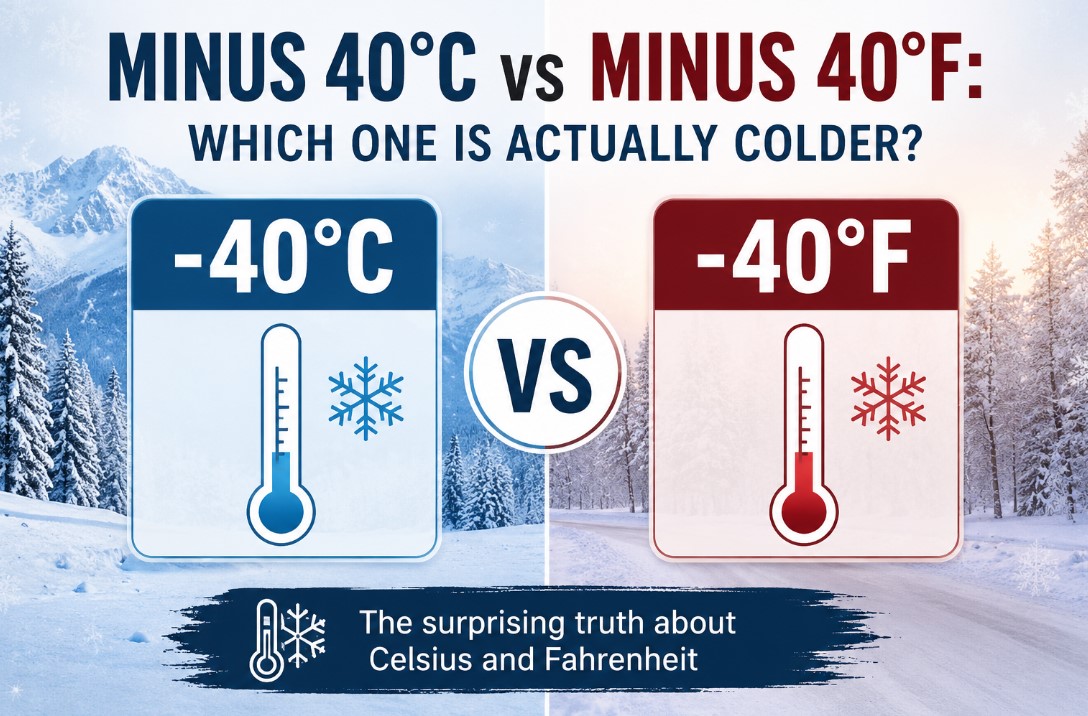
When people compare temperature scales, one question often comes up: which is colder, minus 40 degrees Celsius or minus 40 degrees Fahrenheit? At first glance, the two numbers look the same, but many people assume one must be colder than the other. The interesting fact is that these two temperatures are exactly equal.
At minus 40 degrees, the Celsius and Fahrenheit scales meet. This means that -40°C and -40°F represent the same temperature. Neither is colder than the other.
Understanding why this happens requires a basic look at how temperature scales work and how they are measured around the world. Knowing the difference can help students, travelers, weather enthusiasts, and anyone who works with scientific or technical information.
Understanding Celsius and Fahrenheit
Celsius and Fahrenheit are two different systems used to measure temperature.
Celsius is widely used throughout most countries. It is the standard temperature scale in science, education, and everyday weather reporting in many parts of the world.
Fahrenheit is primarily used in the United States for weather forecasts, household thermometers, and daily temperature measurements.
The two scales have different starting points and intervals:
| Measurement | Celsius | Fahrenheit |
| Water freezes | 0°C | 32°F |
| Water boils | 100°C | 212°F |
| Average room temperature | 20°C to 25°C | 68°F to 77°F |
Because the scales are built differently, a temperature value in one scale is usually not the same when written in the other scale.
Why Do the Scales Meet at Minus 40?
Most temperature values have different numerical representations on each scale. For example:
- 0°C equals 32°F
- 20°C equals 68°F
- 30°C equals 86°F
- 100°C equals 212°F
However, there is one special point where both scales display the same number.
That point is minus 40.
Scientists can verify this using the temperature conversion formula:
°F = (°C × 9/5) + 32
When the value is -40°C, the result becomes -40°F.
This unique crossover point makes minus 40 one of the most interesting temperatures in measurement science.
How Cold is Minus 40?
A temperature of minus 40 degrees is extremely cold and can be dangerous for people, animals, and equipment.
At this temperature:
- Exposed skin can freeze quickly.
- Vehicles may have difficulty starting.
- Water pipes can freeze.
- Batteries lose efficiency.
- Outdoor activities become risky without proper clothing.
Many regions in northern Canada, Alaska, Russia, and parts of Scandinavia occasionally experience temperatures near or below this level during winter.
In such conditions, people typically wear multiple layers of insulated clothing, thermal gloves, hats, and specialized winter footwear.
Real-World Effects of Extreme Cold
Very low temperatures affect daily life in several ways.
Impact on Human Health
Cold weather can place significant stress on the body. Prolonged exposure may lead to:
- Frostbite
- Hypothermia
- Reduced circulation
- Difficulty breathing in sensitive individuals
People working outdoors often require protective gear and frequent warming breaks.
Impact on Transportation
Transportation systems face challenges in severe cold.
Common issues include:
- Thickened engine fluids
- Reduced battery performance
- Frozen fuel lines
- Icy road conditions
Many cold-climate regions use engine block heaters and winter-grade fluids to reduce these problems.
Impact on Infrastructure
Buildings and utilities must be designed to withstand extreme winter conditions.
Examples include:
- Enhanced insulation
- Heated water systems
- Stronger roofing materials
- Backup heating solutions
Without proper preparation, cold temperatures can cause costly damage.
Why Temperature Conversion Matters
Temperature conversion is important in many industries and daily activities.
People often need to convert values when:
- Traveling internationally
- Reading scientific research
- Following weather forecasts
- Working with engineering specifications
- Using technical equipment
Understanding both scales helps prevent confusion and improves communication between countries that use different measurement systems.
Common Temperature Comparisons
The following table shows several familiar temperatures in both scales.
| Celsius | Fahrenheit |
| 40°C | 104°F |
| 30°C | 86°F |
| 20°C | 68°F |
| 10°C | 50°F |
| 0°C | 32°F |
| -10°C | 14°F |
| -20°C | -4°F |
| -30°C | -22°F |
| -40°C | -40°F |
This table highlights how the numerical values become closer together as temperatures decrease until they eventually meet at minus 40.
Frequently Asked Questions
Is minus 40 Celsius colder than minus 40 Fahrenheit?
No. They are exactly the same temperature.
Why do Celsius and Fahrenheit meet at minus 40?
The mathematical relationship between the two scales causes them to intersect at that specific value.
Is minus 40 considered dangerous?
Yes. It is an extremely cold temperature that can pose serious health and safety risks without proper protection.
Which countries use Celsius?
Most countries worldwide use Celsius for weather reporting and daily temperature measurements.
Which country mainly uses Fahrenheit?
The United States is the primary country that uses Fahrenheit for everyday weather forecasts.
Final Thoughts
The answer is simple: minus 40°C and minus 40°F are equal, so neither is colder than the other. This rare point is where the Celsius and Fahrenheit scales intersect. While the numbers may appear identical by coincidence, the equality comes from the mathematical relationship between the two measurement systems. Understanding this fact can make temperature conversions easier and help explain one of the most interesting connections between the world’s two most common temperature scales.



Top 10 Legacy Software Modernization Companies in 2026

Manikarnika Ghat in Varanasi: History, Cremation Rituals, Beliefs and Visitor Guide

How to Choose an Ergonomic Office Chair for Women That Actually Fits

Top Movies and TV Shows in the US: JustWatch September 2026 Streaming Charts

5 Best Indoor Air Quality & Mold Companies in Houston (2026)
-

 Celebrity1 month ago
Eileen Gu: Age, Parents, 2026 Olympics, Modeling Career, Height and Personal Life
-

 Tech1 month ago
18Moa – Website Directories, Online Discovery, and Safer Browsing
-

 Animals1 month ago
Understanding the American XL Bully Ban in the UK: Rules and Changes in 2026
-

 Tech2 months ago
WhatsApp Chat Theme Not Showing? How to Fix It